Five years ago, I walked into a call center that smelled faintly like a wet basement wrapped in an old gym towel. The building manager swore the carpets were new, the janitorial crew meticulous, the outdoors dry as a bone. She was right on all counts. The problem lived above the drop ceiling, where the supply trunks winked with condensation and the evaporator coil looked like a chia pet. A week later, after coil hygiene, drain repair, and a square mile of commercial duct cleaning, the “basement” smell retired. Productivity ticked up, the HR inbox cooled off, and the safety committee finally had something pleasant to report.
Mold in commercial HVAC systems is a quiet adversary. It rarely storms the gates, it waits. It waits for a cool coil, warm air, a sticky drain pan, a little fiberglass dust, and a few days of complacency. If you manage a building with real occupants and real revenue, waiting is a bad plan. That is why a proactive approach that pairs targeted commercial duct cleaning with intelligent moisture control keeps mold in your case studies, not your ceiling plenum.
Why buildings with “good” HVAC still grow mold
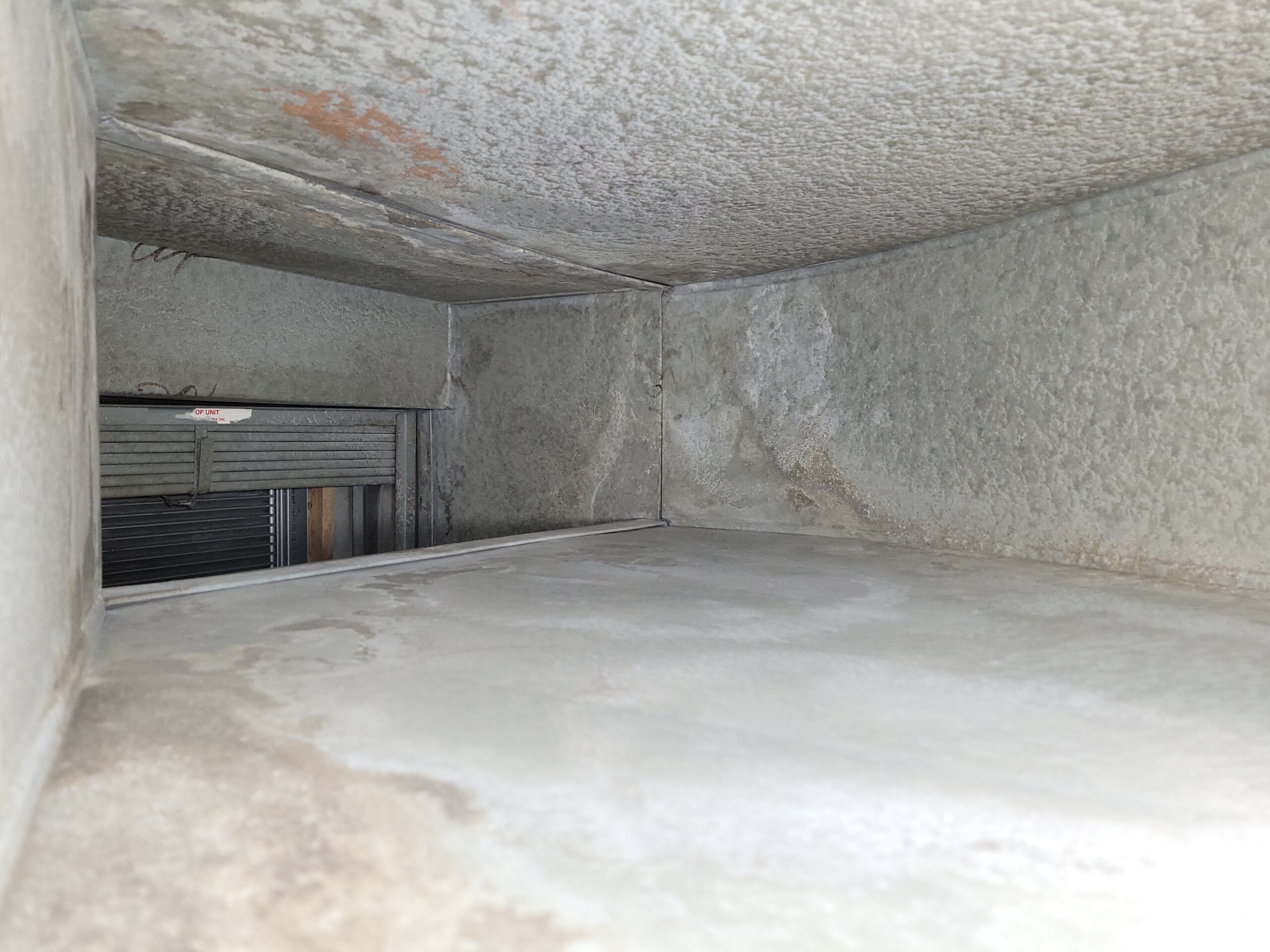
Most buildings are engineered on paper to stay dry, then operated in the real world where doors prop open for deliveries, economizers drift out of calibration, and condensate lines discover their inner beaver. Mold does not need a swamp. It needs a surface that swings below the dew point, a little nutrient, and time.
The usual culprits are depressingly mundane. Insulation that once fit snugly around the supply plenum gapes open after a filter change. A VAV box with a sweating reheat coil sits over a warm corridor ceiling. The ERV wheel slips on its belt, and the outdoor air damper lets in a humid lunchtime breeze the coil cannot finish. Construction dust sneaks into return paths, settles in lined duct, and becomes a buffet for spores every rainy season. Meanwhile, the coil, coated with a fuzz of lint and skin flakes, loses heat transfer and runs colder longer, pulling condensation further down the line.
A note on insulation: internally lined duct is not the enemy, but it is less forgiving. It muffles sound, which tenants love, but it also offers a carpet-like surface where dust can anchor. In a dry system, that is fine. In a system that occasionally grazes the dew point, that surface stays damp just long enough to grow a hobby farm.
What cleaning actually does, and what it never will
Commercial duct cleaning, done correctly, does three things very well. It removes the dust and debris that feed microbes. It restores design airflow by clearing blockages in coils, turning vanes, and dampers. And it exposes problems, because once you can see the metal, you can see the leaks, rust, and undersized access you missed before.
What it will not do is fix moisture control. If the drain pan holds an inch of tea-colored water, cleaning the ducts is cosmetic. If the economizer allows 40 percent outdoor air overnight in July because somebody changed a default, cleaning is a bandage on a leaky roof. Cleaning is a partner to prevention, not a substitute.

Done badly, cleaning can make things worse. Aggressive brushing of friable liner can release more fibers and embed spores deeper. Spraying biocides like you are painting a fence is a fine way to perfume a problem without solving it. The difference between good and bad is process, proof, and respect for the materials.
When to pull the trigger
Budgets like predictability, and cleaning cycles love nuance. I coach owners to treat duct hygiene like dental hygiene: a baseline of regular care with earlier intervention when you see bleeding gums.
Here are building conditions that warrant immediate, not “sometime next fiscal,” commercial duct cleaning:
- Odors that arrive with the fan schedule, especially musty or sweet-acrid scents near supply diffusers or returns Visible growth on coils, drain pans, or supply plenums, or particulate blow-off from registers after start-up Post-construction or renovation dust anywhere near return paths, regardless of how spotless the floors look Measured pressure drops across coils or filters that keep drifting high despite on-time filter changes Complaints clustered by zone, not by individual desks, especially after seasonal changeovers
Beyond emergencies, use calibrated intervals. A light-use office with well-sealed ductwork might go 5 to 7 years before a thorough cleaning. A medical clinic with procedural rooms could need annual coil and plenum hygiene and a 2 to 3 year duct cycle. Food production or any process with sticky aerosols will run faster than either. When in doubt, schedule inspections, not autopilot cleaning, and go where the evidence leads.
What a competent cleaning looks like from the ladder
The best days start with an assessment that includes photos, not a shrug and a quote. Techs should pop panels, snake a camera, and trace condensate routes like a detective. If they cannot show you the coil face and downstream side, they are guessing.
Containment comes next. Access doors get cut where you can actually reach the coil throat and the first three duct elbows without turning your wrist into a pretzel. Negative air machines with HEPA filtration keep the plenum under control, so you are not seasoning the ceiling tiles with what you just scraped off the metal. For agitation, soft bristle brushing or compressed air whips are standard for bare metal. For lined duct, techniques change: gentle brushing and high-volume vacuuming through capture hoods, with special care to avoid tearing the liner. If the liner is shedding, stop. That is a replacement conversation, not a bigger brush.
Coil cleaning earns its own paragraph. A fouled coil is mold’s favorite resort. The method matters more than the brand of foam. Pre-rinse with low pressure to avoid bending fins. Use a cleaner matched to the coil metal and soil, avoid high pH on aluminum unless you like gray streaks and brittle fins. Rinse thoroughly until runoff is clear. If the coil is deep and the face is tidy but the leaving air temperature will not hit target without a longer compressor runtime, consider coil removal and offsite cleaning or replacement. It sounds extreme until you tally the energy penalties from a thermally blind coil.
Drain pans and lines are the plot twist in most mold stories. Pitched pans are not a suggestion. A pan that looks flat is probably pitched the wrong way by a quarter inch. Verify slope with a level, clear the trap, and add a cleanout you can reach without yoga. Condensate switches should shut down the unit before the pan becomes a koi pond.
Antimicrobials, when used, belong on clean, dry surfaces and need an EPA registration for HVAC use. They are not a shortcut for scrubbing. Clear documentation of chemical names, SDS, and application rates separates pros from magicians. Encapsulants can lock down fibers in slightly worn liner, but they are not spackle for delaminated board. When the substrate is rotten, paint will not bring it back.
Verification should be boring and decisive: before and after photos from the same angles, light meter readings on coils if available, pressure drop and airflow data, and notes on any repairs that still need an HVAC contractor, not the cleaning crew. ATP swabs, if used, offer trend information, not a gospel. Particle counts help if you capture them upstream and downstream with repeatable settings.
The tricky business of lined duct and duct board
Internal fiberglass liner and duct board were installed for reasons: acoustics, cost, and speed. They deserve respect and boundaries. The deeper the grooves in the liner, the more dust they can trap and the harder they are to clean without damage. In older buildings, liner may delaminate on elbows and near access doors simply from years of turbulence. Once fibers dislodge, the cleaning plan becomes a replacement plan.
Encapsulation, applied thinly and evenly, can extend the life of stable liner and reduce shedding. It must be compatible with the existing material and cured under dry conditions. Encapsulation is not appropriate for areas with recurrent condensation. Shiny encapsulated mold is still mold.
Flexible duct occasionally sneaks into commercial spaces, usually for short diffuser connections. If it is more than a few feet, kinked, or flattened by a box of ceiling tiles, no cleaning process will fix the airflow losses. Replace it. The cost is trivial compared to the hours you will spend vacuuming a limp spring.
Prevention that actually prevents
I have yet to find a building where the mold problem survived a disciplined attack on moisture, airflow, and housekeeping near the air path. Most prevention lives in the unglamorous details: a tight pan trap, a damper that closes when it should, a filter that fits without daylight around the frame.
Here is a compact, field-tested mold prevention playbook you can hand to your facilities team:
- Keep supply air at or below design humidity by verifying coil approach and superheat, not just supply temperature Maintain positive building pressure relative to outdoors by tracking differential pressure on the BMS and logging door-prop events Seal and insulate cold surfaces at plenums, VAV boxes, and reheat coils so they do not dip below the dew point of the surrounding air Fit filters that actually fit, step up to higher MERV ratings when fans can handle the pressure, and eliminate filter bypass with gaskets or clips Test, clean, and pitch every drain, and treat pans with brushable, non-porous coatings where corrosion starts
For coils that never seem to stay clean, UV-C at the coil face can be a smart, targeted investment. It keeps biofilm from turning your coil into a sponge. Lamp positioning matters. Too close, and you cook plastics. Too far, and nothing happens but vendor invoices. Replace lamps on schedule, not when they finally dim enough to notice.
Do not forget fresh air intakes. I have found intakes dumping in spores from mulched planters, diesel particulates from delivery bays, and pollen storms from ornamental grasses. If the intake sees a leaf blower more often than a maintenance tech, you have the wrong priority.
Watching the right data on your BMS
Your building automation system knows when mold will visit, if you ask the right questions. Trend the leaving air temperature and leaving air relative humidity at each air handler, not just the supply temperature. Watch the differential pressure across filters and coils, and check that it recovers after cleaning. Plot the outdoor air fraction against outdoor enthalpy and see if the economizer behaves when afternoons turn sticky.
Alarms set on relative humidity alone can be noisy. Pair them with time. A supply RH spike that lasts 15 minutes during a compressor changeover is trivia. An RH above 80 percent for hours with airflow across lined duct is an invitation.
Special cases that demand extra attention
Natatoriums, kitchens, and process spaces bend the rules. Pool rooms run warm and humid by design, with dedicated dehumidification and air distribution that sweeps across the water surface. Any air handler that shares return paths with a natatorium inherits its moisture personality. Isolate them. Kitchens load return air with grease that bonds to dust. Duct downstream of a greasy coil behaves like flypaper. Coil cleaning frequency doubles. Healthcare facilities layer on infection control risk assessments, containments, and shift work, and your cleaning plan needs to speak ICRA, not just HVAC. Data centers are crisp and dry but cannot tolerate a speck of lint on a sensor or the downtime to chase it. Schedule like a heist, at night, with redundancy.
Museums and archives live and die by stable humidity. A little mold in their duct is not “little” when it drifts toward a canvas. Sensors rule here, and any cleaning crew that cannot produce a containment plan with HEPA air changes and white-glove standards should practice elsewhere.
What it costs and what it saves
Pricing varies by region, access, system complexity, and the number of air handlers. For straightforward office systems with good access and mostly bare metal duct, whole building projects commonly range from the low tens of thousands into six figures for large campuses. As a very rough planning tool, some owners budget in the ballpark of 0.20 to 0.60 dollars per square foot for basic systems, with higher numbers when internal liner requires delicate work or when night shift premiums apply. Individual air handler cleanings, including coil and plenum, often fall between 2,000 and 10,000 dollars per unit, again depending on coil size, contamination, and access.
Savings are easier to defend when you track them. Clean coils reduce pressure drop and restore heat transfer. That shortens compressor runtime and fan energy. Field results vary, but it is not unusual to see fan and cooling energy reductions in the single to low double digits after a dirty coil returns to spec. If the coil was a mess and the economizer logic was out to lunch, savings can feel dramatic. Fewer complaints translate to fewer work orders and less productive time lost. Those soft costs do not show up on an energy bill, but they land on your lease renewals.
Choosing a contractor without rolling dice
Certification is not a magic wand, but it sets a floor. NADCA membership and compliance with ACR, The NADCA Standard, mean the contractor speaks your language and keeps records. Ask for before and after photos from three jobs in buildings like yours. Demand a safety plan that addresses ladder use, lockout/tagout, and ceiling work. If the building is healthcare, ask about ICRA training and how they coordinate with infection prevention.
Insurance and documentation matter as much as technique. If a contractor cannot show proof of liability and workers’ comp, the price is not low, it is dangerous. If they do not include access door patch standards, chemical SDS, and a warranty on their work, expect surprises later. A good crew leaves the mechanical room neater than they found it, labels the access doors they cut, and returns a week later if something settles or squeaks.
Scheduling without making enemies
Even a tidy job makes noise. Arrange night or weekend work for tenant-heavy floors. Warn occupants about temporary odors if you are using coil cleaners with a scent, or better yet, choose neutral formulations. Coordinate with security so negative Homepage air machines and hoses are not mistaken for a sci-fi set. Stage materials on one floor at a time, and treat the ceiling grid like a guest’s furniture.
Ventilation cannot go dark without a plan. If you must shut down an air handler, verify that spaces it serves do not house temperature-sensitive equipment or after-hours workers. Communicate like a pilot: what will happen, when, how long, and what the backup plan is if you hit a snag.
A short case, from soaked to stable
A distribution center called on a June morning with a rash of complaints by the loading docks. Staff felt “clammy and dizzy” by the second shift. We found the economizer 30 percent open because of a sticky actuator, 90 degree air wandering over a coil already half blind with a lint blanket. The supply trunks above the mezzanine were sweating like iced tea glasses. We cleaned the coil and plenum that week, sealed bypasses around filters with foam gaskets, fixed the actuator, and dialed in supply air humidity targets on the BMS. Two weeks later, we added UV-C at the coil because the location guaranteed ongoing dust. The odor vanished. So did the lunchtime exodus to the parking lot for fresh air.
It was not a heroic rescue, just a sequence of basic moves done in the right order. That is the part facility teams sometimes miss under time pressure. Fix the water. Clear the dirt. Keep it that way.
Reality checks and trade-offs
Not every dusty duct needs cleaning this year. If your coils are pristine, pans dry, filters tight, and your complaint log is a yawn, spend your money on sealing supply plenums, insulating bare control valves, and recalibrating sensors. Conversely, not every moldy duct should be cleaned. If the liner smears under your thumb or flakes into the airstream, replace it. Encapsulation is a bridge, not a highway.
Biocides look decisive on invoices and feel reassuring to people who like the smell of “lemon clean.” Used properly, they can reduce re-colonization on non-porous surfaces. Sprayed like air freshener, they become theater. I prefer a documented cleaning baseline, then targeted chemistry on stubborn areas with poor drying potential. Your nose and your particle counter should agree afterward.
Pairing cleaning with design improvements
Sometimes the smartest move is small design corrections that pay you back for a decade. Add a drain pan float switch tied to the BMS instead of a lonely local trip. Install access doors at the coil upstream and downstream so you can inspect without contortions. Raise outside air intakes or baffle them if they slurp from a loading dock. Replace filter racks that rely on tape and hope with proper frames and clips. Give the VAV boxes insulation jackets where they sweat. These are capital peanuts with operational walnuts.
If your air handlers are older than your interns, build coil replacement and variable speed fan retrofits into your plan. The day you open a 30 year old unit and find the coil fins turn to powder at a touch is the day you wish you did.
The long view
Every building drifts. Dampers drift out of tune, seals drift apart, and expectations drift until musty air becomes “just how summer smells on the third floor.” A proactive approach to mold prevention interrupts that drift. It couples maintenance tasks people remember - filter changes, belt replacements - with the less obvious ones like drain slope checks, economizer calibration, and inspection-grade access.
Commercial duct cleaning has its moment in that plan. It is not the hero. It is the supporting actor that steals a few scenes when you need it most. Use it to reset your system to a clean baseline. Use your sensors and your nose to keep it there. And the next time a building starts to smell like a basement in a rainstorm, you will be the person who fixes it before lunch, not the one explaining it at the next lease negotiation.
The call center with the gym towel odor? They framed a photo from the inside of their gleaming coil and hung it in the mechanical room. It sounds corny, but it worked. Techs took pride, supervisors paid attention, and the HR inbox stayed boring. That is the real prize: a building that smells like nothing at all, day after day, because the air path is clean, dry, and relentlessly uninteresting.